詳細(xì)介紹
觸摸屏:電子設(shè)備交互革新的關(guān)鍵輸入設(shè)備
Touch screen: a key input device for the innovation of electronic device interaction
In the long history of electronic device development, the emergence of touch screens has triggered a profound interactive revolution. As a key input device, it fundamentally changes the way people interact with electronic devices, providing powerful driving force for the expansion of electronic device functionality and improvement of user experience.
Looking back at the early stages of electronic devices, the interaction between users and devices mainly relied on traditional operating methods such as mechanical buttons and knobs. These methods are not only complex to operate, but also have low interaction efficiency, making it difficult to meet people's needs for convenient and efficient interaction. With the continuous advancement of technology, touch screens have emerged, replacing traditional mechanical operations with touch operations, bringing users an unprecedented interactive experience.
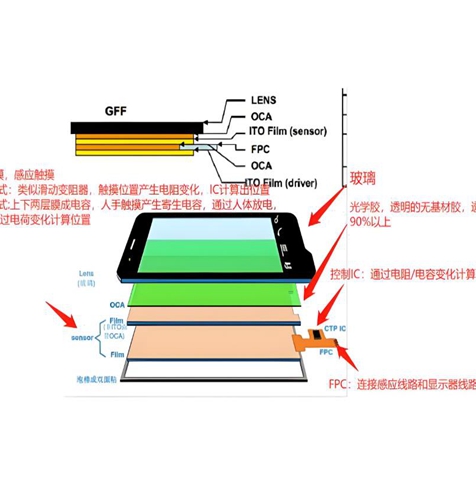
The working principle of touch screens is based on various advanced technologies, such as resistive, capacitive, infrared, and surface acoustic wave. Resistive touch screens determine the touch position by detecting changes in resistance at the touch point. Its advantage is accurate positioning and no special requirements for touching objects, but its disadvantage is that the screen is easily scratched and has a relatively short service life. Capacitive touch screens utilize the interaction between human electric fields and screen surface capacitance to perceive touch, and have advantages such as fast response speed and good support for multi touch. They are widely used in devices such as smartphones and tablets. Infrared touch screens detect the position of touch objects by emitting and receiving infrared radiation, which has the advantage of strong adaptability to the environment and is suitable for use in some harsh environments. Surface acoustic wave touch screens use the propagation characteristics of sound waves on the screen surface to identify touch points, with high clarity and resistance to interference.
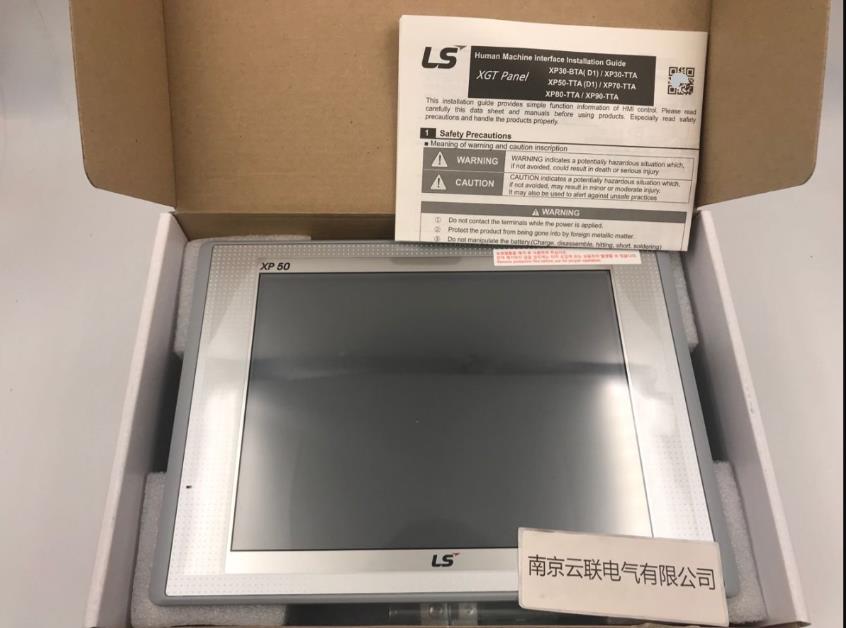
These different types of touch screen technologies have their own advantages, and their emergence and development provide more choices for the design and application of electronic devices. Whether in the field of consumer electronics, industrial control, medical equipment, transportation and other professional fields, touch screens have been widely used. In the field of consumer electronics, touch screens have become a standard configuration for devices such as smartphones, tablets, and smart TVs. Users can easily complete various operations such as browsing web pages, watching videos, playing games, processing documents, etc. by touching the screen. The application of touch screens makes the operation of these devices simpler and more intuitive, greatly improving the user experience. In the field of industrial control, touch screens serve as human-machine interfaces, providing operators with a convenient way to control equipment. Operators can monitor the production process, adjust equipment parameters, issue instructions, etc. by touching the screen, which improves the automation level and production efficiency of industrial production. In the field of medical equipment, the application of touch screens makes the operation of medical devices more precise and convenient. Doctors and nurses can view patients' medical records, adjust the parameters of medical equipment, conduct diagnosis and treatment, etc. by touching the screen, which improves the accuracy and efficiency of medical work. In the field of transportation, touch screens have been applied in car navigation systems, aircraft cockpit control systems, and other aspects, providing drivers with a more intuitive and convenient operating experience, and improving the safety and efficiency of transportation.
The emergence of touch screens has not only changed the way electronic devices interact, but also driven functional innovation and design changes in electronic devices. Due to the integration of various interactive functions such as clicking, sliding, zooming, rotating, etc., touch screens have greatly expanded the functionality of electronic devices. For example, on smartphones, users can achieve various functions such as taking photos, recording videos, making payments, and socializing by touching the screen, making smartphones an indispensable tool in people's lives. At the same time, the application of touch screens also makes the design of electronic devices more concise and beautiful. Traditional electronic devices are often limited in their appearance design due to the need for a large number of mechanical buttons and interfaces. The application of touch screens enables electronic devices to reduce the number of mechanical buttons, adopt a simpler and smoother appearance design, and improve the device's aesthetics and portability.
As a key input device for the innovation of electronic device interaction, touch screens have played an important role in the development of electronic devices. It has driven the expansion of electronic device functionality and improved user experience through innovative interaction methods, advanced technological principles, and a wide range of application areas. In the future, with the continuous advancement of technology, touch screen technology is expected to continue to innovate and develop, bringing more surprises and changes to the development of electronic devices.
#Keywords: touch screen, electronic devices, interactive innovation, input devices, technology applications
Copyright ? 2022 南京云聯(lián)電氣有限公司 版權(quán)所有 郵箱:[email protected] 咨詢QQ:631929870 994274685 Skype:yluedq
地址:江蘇省·南京市江寧區(qū)雙龍大道1222號同曦國際廣場1號樓8F P.O.211100 電話:025-52791167 025-52791168 傳真:025-52791169
ICP備案號:蘇ICP備07034752號-8 網(wǎng)站地圖 baidu地圖 技術(shù)支持:易未萊科技
<b id="k4jna"><abbr id="k4jna"></abbr></b>